

Transformative Breeding for Accelerated Adoption
Africa boasts a rich diversity of indigenous rice species, including Oryza glaberrima, O. barthii, and O. longistaminata, that are adapted to challenging environmental conditions.
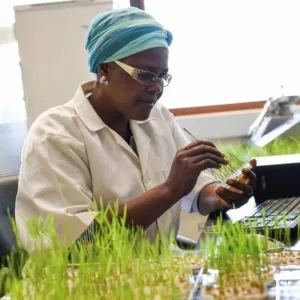
Among the rice varieties developed by AfricaRice, the NERICA varieties are significant achievements from interspecific hybridization, between Oryza glaberrima and O. sativa, cultivated on over 2 million hectares across 16 countries in Sub-Saharan Africa. Despite this progress, the continent still imports 40% of its rice consumption.
Therefore, revitalizing the further development and adoption of improved rice varieties targeted to changing climate and meeting consumer preferences is crucial. AfricaRice is pursuing a "transformative" breeding strategy to develop superior varieties and germplasm based on rigorous, evidence-based improvements, enabling stakeholders in the rice value chain to seize better business opportunities.
Consequently, the breeding program focuses on seven major market segments serving major rice ecologies in sub-Saharan Africa (SSA), and operates through three cyclic phases to deliver the transformative products:
- Design (market studies and impact assessments)
- Engineering (product development and testing)
- Delivery (product release and scaling)
Initial investments secured by AfricaRice through the CGIAR-Accelerated Breeding Initiative and other donors helped to establish speed breeding and affordable mid-density genotyping, resulting in the yield increase by about 20%. Importantly, AfricaRice analyses and incorporates post-breeding drivers for adoption in the design of the breeding programs. This facilitates rapid adoption of the new products by actors along the entire value chain.
Through its Africa-wide Breeding Task Force, AfricaRice fosters collaboration among National Agricultural Research Systems (NARES) from 28 countries, ensuring a coordinated approach to product development and dissemination. Comprehensive multi-environment evaluation and large-scale on-farm testing, alongside the involvement of value chain actors (policymakers, R&D, seed producers, millers, traders and consumers), are adopted as a vital strategy for scaling these products.
Sharing capacity with partners, ensuring access to relevant germplasm, and establishing strong evaluation networks with NARES and the private sector are vital elements of the breeding strategy designed to foster innovation in demand-driven varieties. This approach also accelerates the adoption of transformative products and facilitates the replacement of older, less productive mega varieties among rice stakeholders across the value chain, contributing to higher productivity and food security in the region.