
AfricaRice-KAFACI New Rice Varieties: Harnessing Science for Impact across Africa
Through the KAFACI rice project implemented by The Korea-Africa Food & Agriculture Cooperation Initiative (KAFACI)-AfricaRice partnership, the 2025 KAFACI Africa Rice New Varieties has been recently released.
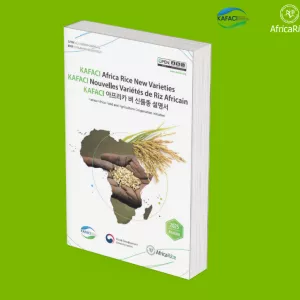
Through the KAFACI rice project implemented by The Korea-Africa Food & Agriculture Cooperation Initiative (KAFACI)-AfricaRice partnership, the 2025 KAFACI Africa Rice New Varieties has been recently released. Since its debut edition in May 2024 showcasing 26 varieties, the catalog has grown rapidly—now enriched with 33 newly registered varieties in 15 African countries featured in this expanded release. Besides high yield potential, other key traits in the released varieties include soft cooking and aroma which are increasingly preferred by urban consumers in several countries such as Cote dʼIvoire, Ghana, Malawi, Mali, Rwanda, Senegal, Tanzania, Uganda, etc.
Africa’s demand for rice is soaring as populations grow and cities expand — but local production has not kept up. The result is a widening gap that leaves the continent heavily dependent on imports and increasingly vulnerable to global shocks. Today, Sub-Saharan Africa brings in nearly 40% of the 38 million tons of rice it consumes each year, including 11 million tons from India alone. This dependency threatens food security and drains precious foreign currency that could otherwise fuel economic growth and development across the continent.
The KAFACI-AfricaRice partnership which began in 2015 offers a unique opportunity to boost rice production in Africa through the introduction and dissemination of high yielding consumer-preferred, improved Tongil-type rice varieties whose superior performance has been validated through wide testing by African breeders.
The initiative has grown to 29 member countries, empowering African rice breeders to define clear product profiles that capture what farmers, millers, and consumers truly need from the next generation of rice varieties. Building on these priorities, African and Korean breeders jointly developed and selected high-performing varieties tailored to both production challenges and market demands across diverse environments. This collaborative innovation pipeline has already delivered 59 superior rice varieties, now poised for large-scale deployment across sub-Saharan Africa—bringing the continent closer to higher yields, stronger value chains, and greater rice self-sufficiency.
“We hope that this book will serve as a valuable resource for African farmers in rice cultivation, and that many more excellent varieties will continue to be developed to contribute to Africaʼs food security,” stated Seungdon Lee, Administrator, Rural Development Administration (RDA), Republic of Korea.
With many of Africa’s rice varieties now more than 20 years old, the KAFACI project is set to be a game-introducing a new generation of high-yielding, market-preferred varieties that can replace outdated seeds and dramatically boost rice production across the continent.
Link to the full publication: KAFACI NewRiceVarieties.pdf