


Steering Committee of the EU-funded Seeds4Liberia Assess Project Impact in Beneficiary Communities
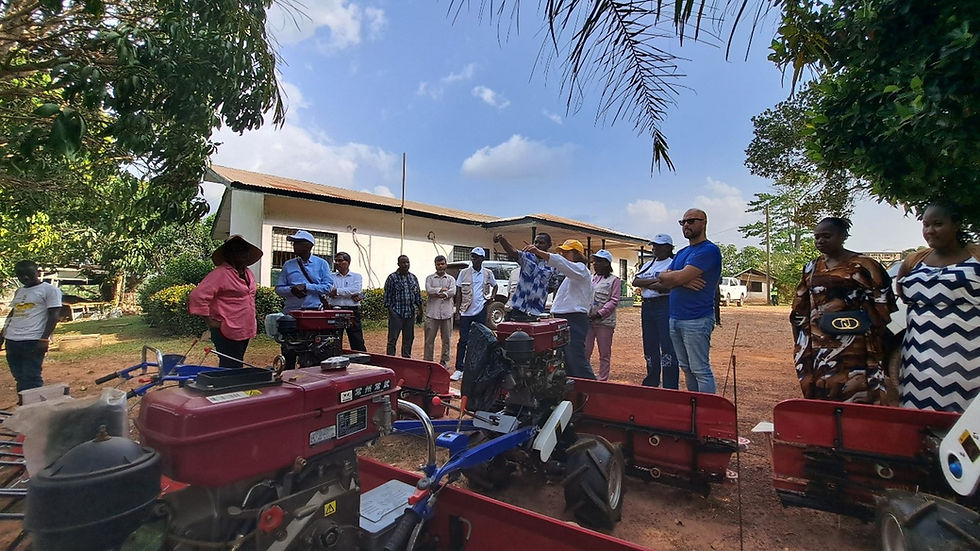
The Steering Committee of the EU-funded Seeds4Liberia Project recently concluded a three-day field monitoring mission to project sites in Bong and Nimba Counties to assess the project's early impact on communities.
The committee visited project sites at Central Agricultural Research Institute (CARI), including the Semi-Autotrophic Hydroponics (SAH) screen house that produces high-quality cassava plants; the Cohort Breeding Hatchery System (CBHS); pond facilities for tilapia and catfish fry production; and the Coffee Germplasm conservation and mother garden to preserve plant genetic identity. They also visited the Tassah fish hatcheries and a coffee nursery hub supported by the project and operated by the National Fisheries and Aquaculture Authority (NaFAA) NaFAA and the Liberia Agricultural Commodity Regulatory Authority (LACRA), respectively, before visiting private and community-based seed producers.
Her Excellency Dr. Nona Deprez, Head of the European Union Delegation to Liberia, commended the project implementation team, emphasizing the importance of collaboration in improving Liberia's food and nutrition security.
“I am so much impressed by what I have seen today. The rice, cassava, coffee, soybean, and fish have all shown some progress despite a very slow start. This progress also reflects strong collaboration among the Implementing Partners, and we thank everyone for it. And I want to encourage everyone to continue in this light. This way, we are working toward a food-secure future for Liberia,” she said.
Similarly, the Deputy Minister for Technical Services at the Ministry of Agriculture, Solomon C. Hedd-Williams, applauded the project's Implementing Partners but called for greater youth and women's involvement.
“What we have seen here today is a sign for Liberia’s seed systems because true agricultural development is evident in high-quality seeds that impart productivity and profitability to farmers. Also, the project's approaches, particularly the establishment of demo sites to transfer technology to beneficiary communities, are very important, and we want to thank our partners. However, I have seen a little representation of you here today. Hope we can involve more youth and women as they are important stakeholders in Liberia’s agriculture sector, especially as sustainability is concerned,” he said.
The visiting committee included the Head of the EU Delegation to Liberia, H.E. Nona Deprez; the EU Delegation’s Program Manager, Antoinio Clemente; Solomon C. Hedd-Williams, Deputy Minister for Technical Services, Ministry of Agriculture; Madam Josephine Francis of the Farmers Union Network of Liberia (FUNL); and technicians from the Ministry of Agriculture (MoA), the Central Agricultural Research Institute (CARI), the National Fisheries and Aquaculture Authority (NaFAA), the Seed Development and Certification Agency (SDCA), and the Liberia Agricultural Commodity Regulatory Authority (LACRA).
AfricaRice, IITA, and WorldFish, the project's international implementing partners, guided the tour.
Project gains since inception
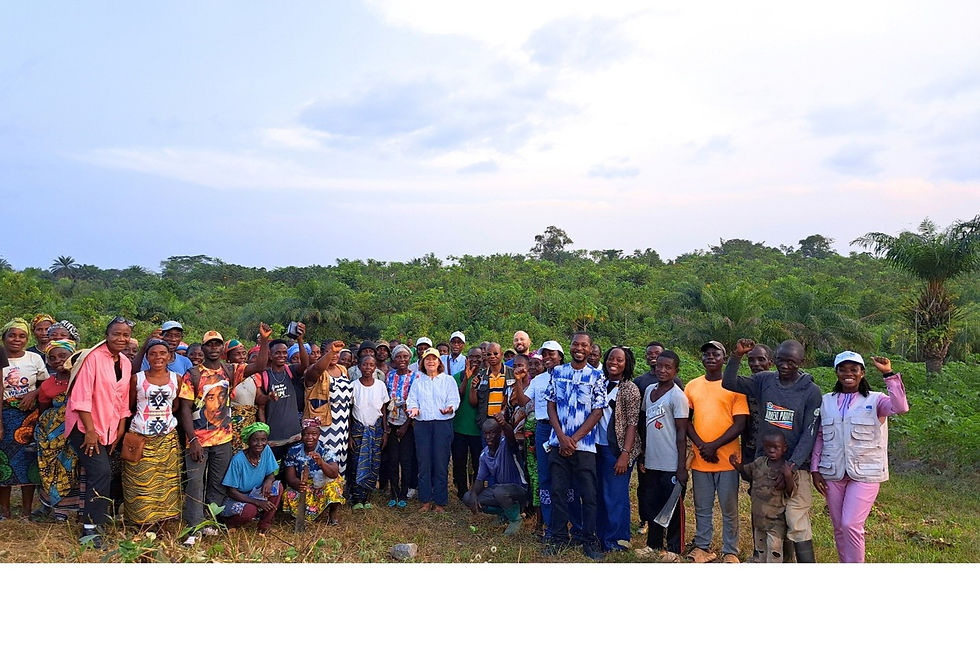
Since its inception in late 2024, the project has cultivated 264 hectares to produce high-quality rice, cassava, coffee, and soybean seeds. Additionally, two hectares have been developed at CARI and NaFAA-Tassah Hatchery for producing quality fish seeds with necessary construction like cohort breeding ponds, nursery ponds, broodstock rearing ponds, indoor hatchery, outdoor circular and rectangular tanks, water tower, and filtration unit. Also, five hectares of land are being prepared by five community-based seed enterprises.
The EU-funded project has already trained 665 individuals, including private and community-based seed producers and staff from government institutions such as extension agents, technicians from MoA, CARI, NaFAA, LACRA, and SDCA, on various aspects of production and best management practices across its rice, cassava, coffee, soybean, and fish value chains.
The EU-funded project is building resilient seed systems for rice, cassava, coffee, soybean, and fish value chains in Liberia. It is jointly implemented by Africa Rice Center (AfricaRice), the International Institute of Tropical Agriculture (IITA), and WorldFish in collaboration with the Ministry of Agriculture (MoA), the Central Agricultural Research Institute (CARI), the National Fisheries and Aquaculture Authority (NaFAA), the Seed Development and Certification Agency (SDCA), and the Liberia Agricultural Commodity Regulatory Authority (LACRA). It supports national development frameworks for enhanced food and nutrition security and job creation in Liberia.
About the EU-funded Seeds4Liberia Project
The EU-funded Seeds4Liberia Project is building resilient seed systems for rice, cassava, coffee, soybean and fish value chains to strengthen food and economic diversification in Liberia with specific deliverables, including strengthening the capacity of government ministry and autonomous agencies like the Ministry of Agriculture (MoA), the Central Agricultural Research Institute (CARI), and the National Fisheries and Aquaculture Authority (NaFAA) to sustainably produce, store, and supply breeder seeds/seedlings of target crop varieties (including bio-fortified) as well as broodstock and quality seed production of improved strains of selected fish species preferred by consumers.
The project is also engaging with students from public and private tertiary educational institutions, along with private seed companies (PSCs) and community-based seed enterprises (CBSEs) and community-based seed producers (CBSPs) to produce sustainably, store, and supply foundation and certified seeds/seedlings of target crops and quality-assured large-size fingerlings of fish while enhancing varietal turnover and increasing yields in farmers’ fields with quality seeds of high-yielding, climate-resilient, and nutritious varieties of target crops and fish species preferred by Liberians.


Comments